Do Glocks Jam? Factors and Ways to Avoid this Problem.
Introduction: Do Glocks Ever Jam?
Glock pistols are known for their reliability. This is a key reason why they are trusted by law enforcement agencies and militaries around the world. Their ability to perform well in difficult, high-pressure situations makes them the choice for many, but, like all firearms, they are not without drawbacks.
Glocks are not immune to problems, including occasional jamming. In this guide, we’ll look at why your Glock might jam, how to fix it, and what you can do to fix the problem. So you can keep your Glock running smoothly and reliably.
What Is a Firearm Jam?
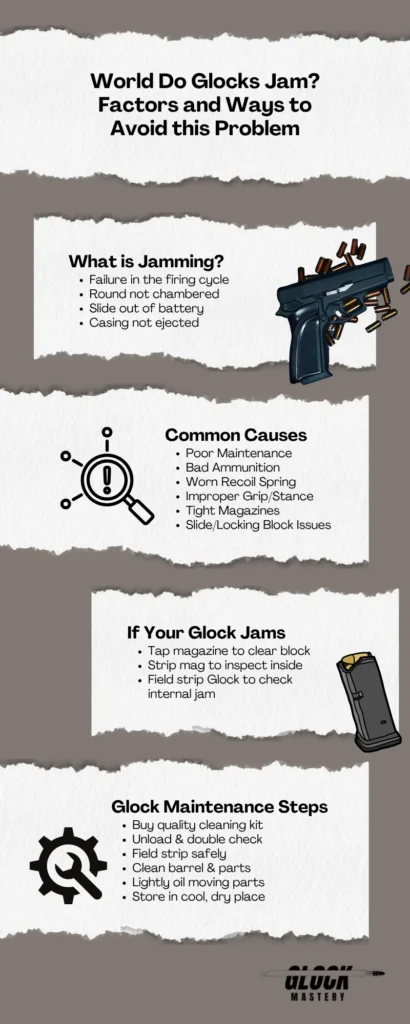
“Jamming” in firearms refers to a mechanism failure in which the weapon’s cycles of operation do not fire correctly. It occurs when a round fails to chamber, the slide is out of battery, or the empty brass is not ejected.
Jams may occur for several reasons, including dirt, neglect, improper maintenance, broken parts, and faulty ammo. The danger posed by such occurrences, in particular, is when the weapon cannot perform as it is designed to, especially in self-defense situations.
Glock Jamming Issues
Glock pistols are reliable, durable, and consistent in performance. Under certain rare circumstances, they can also have their share of firearm jamming causes, as is the case with all other types of guns. In case you are facing any jamming issues with your Glock gun, below are some causes and solutions to help you:
Poor Maintenance
It is also possible that Glock jams occur due to improper maintenance of the firearm’s parts. Glocks function through a series of interlocking parts that can attract dirt particles over time.
To avoid this, a gun owner can perform basic maintenance, such as cleaning the Glock and applying a small amount of high-quality gun oil to critical moving parts. Lightly coat the moving parts of the pistol with oil to keep them working properly.
Bad Ammunition
Improper or jammed ammunition is also another potential contributor to Glock jams. This can take the form of old or rusted bullets that have not been stored in the right conditions.
Always use high-quality factory ammunition from reputable manufacturers for your Glock pistol. Avoid damaged, corroded, or improperly stored rounds, as poor ammunition is one of the most common causes of firearm malfunctions.
Weak Recoil Spring
In a Glock pistol, the recoil spring serves two purposes: The recoil spring absorbs rearward slide energy and helps return the slide to battery after firing. If the recoil spring wears out and loses strength, the Glock slide may have trouble moving.
This can be curbed through proper spring maintenance, in which one replaces their spring after a specified period, tailored to their shooting volume and usage patterns. However, this may vary with actual use and other conditions.
Improper Grip or Stance
Whenever the gun is held improperly or in any position that blocks the slide’s movement, it may result in a failure to feed or to eject, commonly known as limp-wristing.
To avoid this, it is wise to train oneself to assume the proper grip and stance when shooting the Glock.
Overly Tight Magazines
Overly tight magazines can also result in Glock jams. In other words, if the magazine does not “give” when installed, the slide would either not move at all or move too slowly, thus causing feed or ejection failures.
To solve this problem, ensure the magazines are not too far into the gun; they should not be too tight. If there is difficulty inserting the magazine, it is most likely too tight and needs some adjustment.
Slide Lock or Locking Block Problems
Damage or wearing slide locks and locking blocks can lead to jamming issues.
If it seems this may be the case, take your Glock to a qualified gunsmith for an evaluation. This problem can be resolved by repairing components such as the slide lock lever or locking block.
Why Glocks Are Known for Reliability
Glocks have gained considerable fame for the reliability of their features, stemming from their simple design. For this reason, they have fewer moving parts, reducing the likelihood of a malfunction. The polymer frame is highly resistant to damage and hard-wearing. Glocks are rust-resistant and have protection against oxidative wear and tear. Whether it is hot, cold, or any other unwelcoming atmosphere, Glocks remain functional. This, therefore, puts them among the best for police forces, militaries, and even civilians. It’s also worth noting that the Glock has a safety mechanism that contributes to its overall reliability and user confidence.
How to Prevent Jamming in Glocks
When using a Glock, it is crucial to take measures to avoid inoperability. Routine care will help ensure the firearm functions properly and prevent Glock malfunctions when firing.
Regular Cleaning and Maintenance
Ensure you regularly clean your Glock pistol to reduce the risk of jamming. Every machine has its moving parts that can be blocked by dirt, and the edges can become blunt due to a lack of proper maintenance. Don’t forget to clean the barrel, slide, and recoil spring to ensure effective, efficient performance.
Use High-Quality Ammunition
Use only reliable, effective ammunition in your Glock. It is also advisable to inspect every round for imperfections before loading. The caliber of the pistol matters; for example, the Glock 20 is 10mm and a popular option. You can also explore accessories such as a Glock 20 threaded barrel for better results.
Proper Lubrication
Applying the correct amount of gun oil to your Glock is advised. If there’s not enough lubrication, some parts will grind; if there is too much oil, it will attract dirt. Apply lubrication only at Glock-recommended contact points to ensure smooth operation without attracting debris.
Correct Use of Magazines
Make sure your magazine is not only free of dirt but also functional. Using an unclean or broken magazine may result in a misfeed or a failure to chamber. Use new magazines where applicable and ensure they are properly seated inside the grip.
Assess the Recoil Spring
Failure to feed properly may also be a result of an overused recoil spring. Make it a habit to inspect the spring for wear and tear after every use. Doing so will remedy failures in the proper cycling of the weapon.
What to Do If Your Glock Jams
If a malfunction occurs, keep the firearm pointed in a safe direction and follow standard tap-rack procedures if trained to do so. If the jam cannot be cleared safely, unload the firearm and seek professional assistance.
Clear Jam from the Magazine by Tapping on it
Giving the magazine a few taps on the surface can help clear racks that are not moving or magazines that are blocked by contents.
Take Apart the Magazine to Clear the Jam
If that fails, take the magazine apart to see if there is any place in it or any internal problems that could be causing the jam.
Opening Up the Glock to Remove the Firing Jam
In case the blockage never seems to clear, attention changes to stripping down the Glock and removing other components to aid in clearing the Glock’s internal system, only if you know how to do it.
Maintenance to Avoid Incurring Jams
Regular cleaning and examination of the Glock will ensure there are no jams, as the working tool will always be in good condition and free of defects.
Glock Pistol Maintenance Tips
Here are some steps you need to follow for your Glock maintenance.
Step 1: Select and Buy an Optimum Cleaning Equipment
Make sure to invest in a high-quality Glock cleaning kit with the correct tool sizes for cleaning.
Step 2: Make Sure That the Glock is Not Loaded
In general, no cleaning is required with a loaded weapon. The pistol chamber and the magazine should be checked for safety.
Step 3: Take Down the Gun
Field-strip the Glock according to the manufacturer’s instructions.
Step 4: Clean the Weapon
Clean the entire firearm using the gun part cleaning solvents and the available cleaning tools for each gun part.
Step 5: Clean the Inside of the Barrel
Make use of a stitch bore brush and a cleaning rod to scrub clean the insides of the barrel and remove any deposits.
Step 6: Clean Every Component
Take care to clean every part of the Glock, including the slide, frame, and recoil spring, paying close attention to areas likely to have dirt.
Step 7: Pay Attention to the Trigger Area
Apply light lubrication only to the recommended steel contact points.
Step 8: Put the Glock Together Again
When the elements are clean and dry, put together the Glock as precisely as possible, taking care to align every part in its place.
Step 9: Perform Some Light Oiling
Lastly, when the pistol has been repaired, oil all steel parts within and outside of the pistol, as well as any moving parts.
Step 10: Keep in the Right Place
Put the Glock in a low-moisture environment, away from heat and cold, to preserve it and guard against rust.
Implementing these few guidelines will help ensure your Glock operates efficiently for many years.
Conclusion
Glock pistols are among the most reliable handguns available, but no firearm is completely immune to malfunctions. Most Glock jams can be traced to poor maintenance, worn components, defective magazines, or low-quality ammunition. By following proper cleaning routines, using reliable ammo, and regularly inspecting key parts, you can significantly reduce the risk of malfunctions and keep your Glock performing at its best.
Ready to master your Glock and keep it running flawlessly? Learn expert tips, troubleshooting techniques, and maintenance secrets at Glock Mastery today!